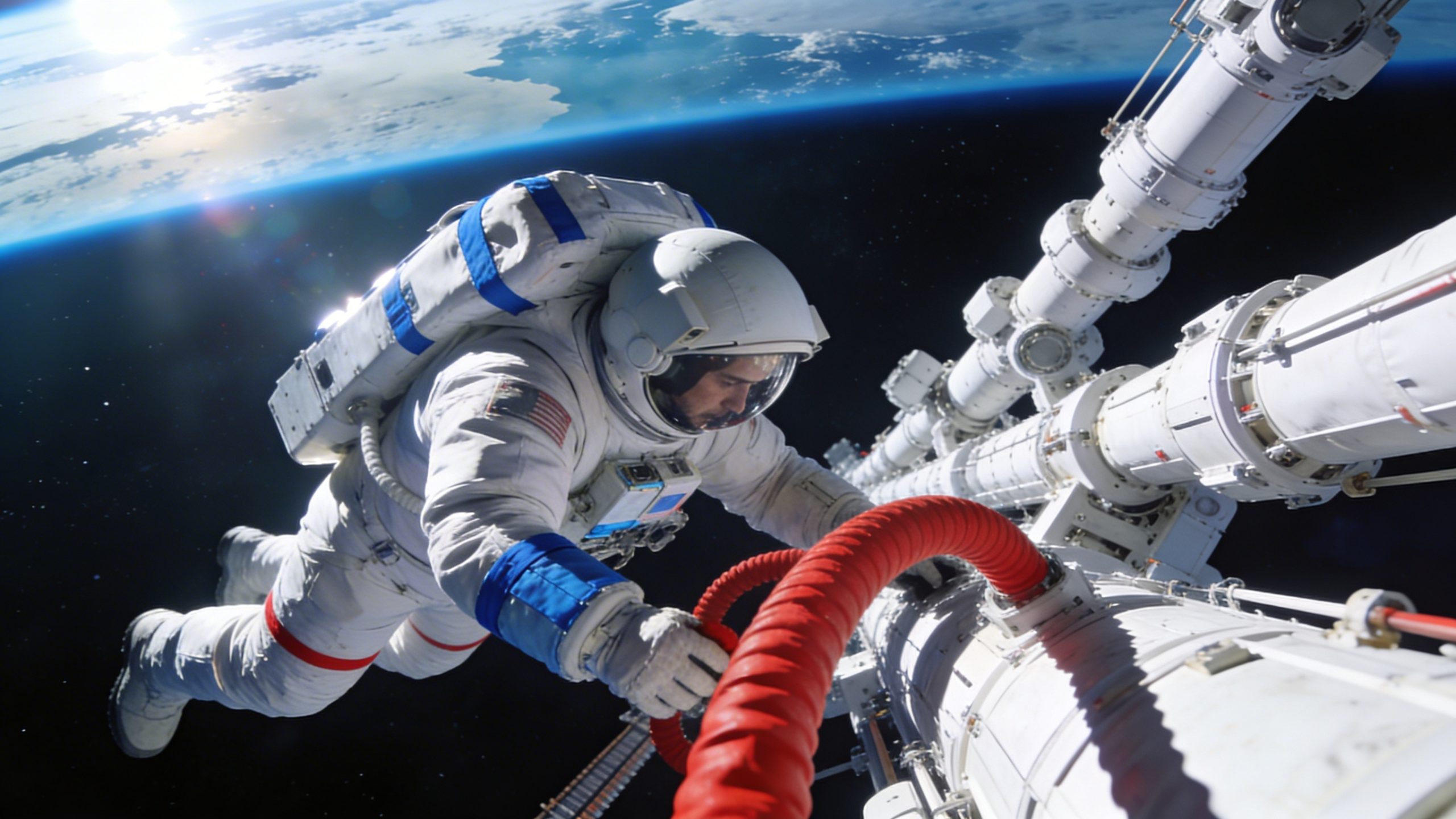
The China Manned Space Agency (CMSA) has announced a call for scientific proposals, inviting researchers to conduct human-related studies on its Tiangong space station. These proposals, accepted starting April 1, 2024, aim to address key scientific issues concerning long-duration human spaceflight.
The primary goal of this initiative is to enhance human health and performance in microgravity environments. It will also support future long-term space missions, focusing on research areas such as space medicine, human factors, and biotechnology experiments.
Research Program Objectives
The program seeks to address foundational and forward-looking research questions related to the healthy survival of astronauts during extended missions. Scientists will investigate how the human body adapts to the space environment, including the effects of radiation, weightlessness, and isolation.
Experiments are expected to aid in developing countermeasures to manage health risks during prolonged space missions. The Tiangong space station offers a unique orbital laboratory for these critical studies.
Tiangong Space Station: A New Orbital Laboratory
China’s Tiangong space station operates as a modular orbiting outpost, having been operational since late 2022. It comprises the Tianhe core module and two laboratory modules, Wentian and Mengtian. The station is designed to host up to three taikonauts for typical six-month missions.
Tiangong serves as a stable platform for diverse scientific experiments across fields like life sciences, materials science, and fundamental physics. The station represents a significant milestone in China’s independent space capabilities.
Broader Context of China’s Space Ambitions
This human research program aligns with China’s ambitious broader space agenda. The nation has consistently expanded its space exploration efforts, including missions to the Moon and Mars, in addition to developing its own space station. China aims to establish itself as a leading global space power.
The CMSA manages China’s human spaceflight missions, overseeing astronaut training, mission planning, and space infrastructure development. This new research call emphasizes the commitment to advancing scientific knowledge in space.
Relevance for India’s Space Sector
China’s progress in human spaceflight and space station research holds notable significance for India. As India advances its Gaganyaan human spaceflight program, challenges and solutions identified through China’s research can offer valuable insights for India’s own efforts.
Both nations are investing considerably in space technology, and India’s private space sector, valued at several thousand crore rupees, can observe global advancements for potential collaboration or competition. Learning from international research on human adaptation to space is crucial for India’s long-term space exploration goals, including developing robust life support systems and space medicine protocols for future Indian astronauts.
Evaluation and Future Implementation
The CMSA will now evaluate all submitted proposals. Selected research projects will be scheduled for execution aboard the Tiangong space station, contributing valuable data to the global understanding of human physiology in space. Future announcements from CMSA are expected to detail selected projects and their timelines.